At a glance
- What to do first Sagrada Família (book ahead), Palau de la Música, Casa Vicens or Palau Güell, sunrise at Barceloneta Our things-to-do guide
- Dinner and lunch Besta, Maleducat, Hanoi Umami Our restaurant and lunch guides
- Coffee and bakeries Origo, Coush Armó Our bakeries and cafés guide
- Rooftops Ohla, Sir Victor, Tope Our rooftop and sunset guides
- Shopping Chandal, Castañer Our shopping guide
- Where to stay Eixample for a first visit The neighbourhood table below
What are the top things to do in Barcelona?
Start with the Sagrada Família and book ahead, because tickets are sold online only. It’s the one we’d tell almost everyone to go inside. Add the Palau de la Música Catalana, the interior we’d choose if you only have time for one, and one Gaudí house. Casa Vicens is Gaudí’s first major house, in Gràcia, and the quieter of the two. Palau Güell is just off La Rambla and can be explored from the basement stables up to the roof terrace. Sant Pau is the choice if you want modernisme beyond Gaudí.
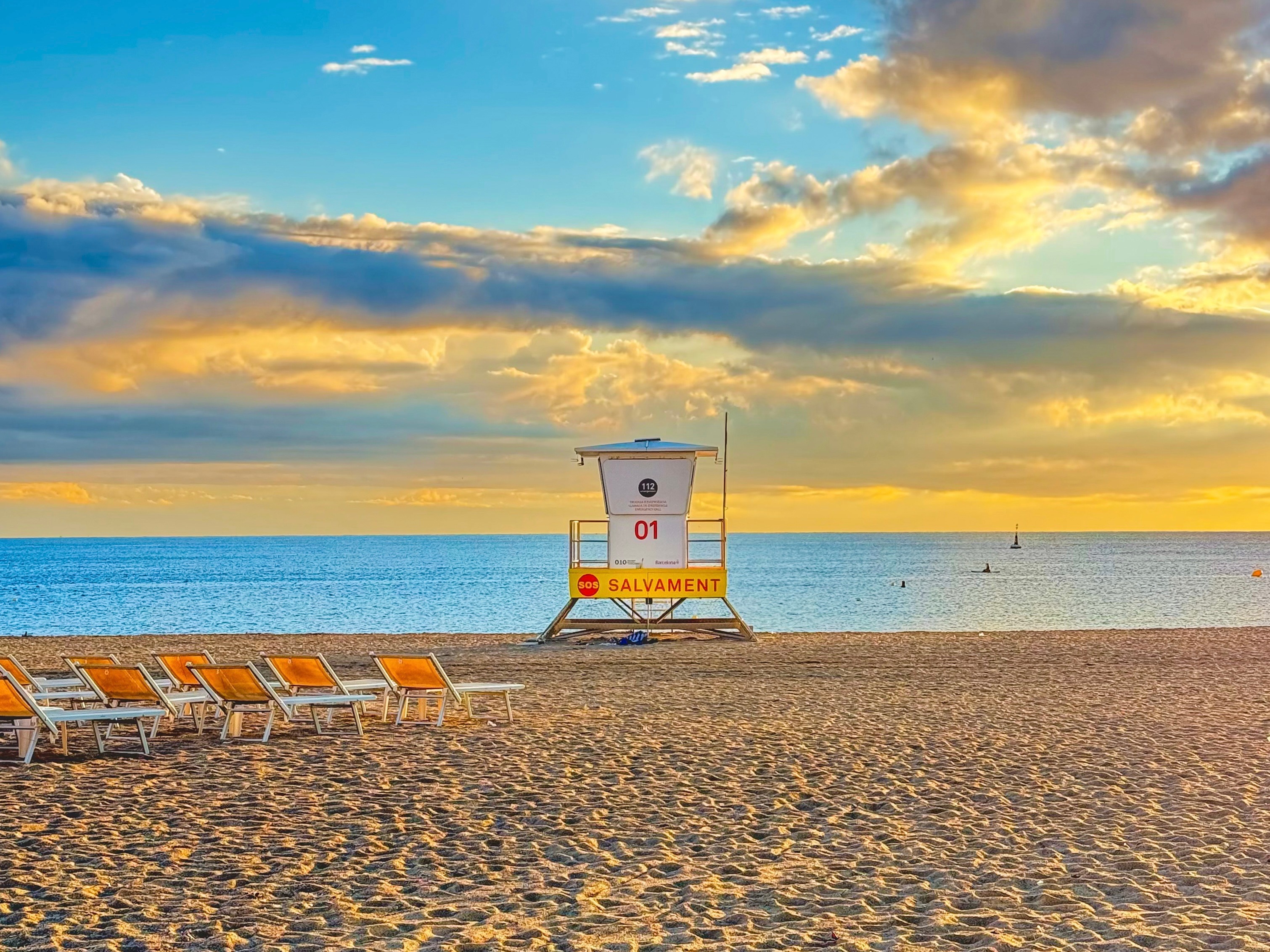
Then add the moments that change the pace. Sunrise at Barceloneta is how we’d start a day, before the beach fills up, and our Barceloneta walk begins at that hour. Montjuïc is for gardens, museums and views, and it needs half a day, not an hour: the Jardins de Joan Brossa are free. The Gothic Quarter is best early or late, and El Born is the neighbourhood for an afternoon on foot, with Santa Maria del Mar and small shops. White Rabbit is an immersive indoor option.
Carretera de les Aigües has been closed to the public since 12 March 2026 because of African swine fever restrictions in Collserola, with no reopening date at the time of writing (checked 31 October 2026). Official notice.
When it rains, choose the Sagrada Família, the Palau de la Música, Sant Pau or White Rabbit, then add a café. For the full list with addresses and the catch at each place, see our guide to the best things to do in Barcelona. If the light is what you’re after, our sunset spots guide starts from a useful fact: the sun doesn’t set over the sea in Barcelona.
The photos most visitors come home with are crowds and queues. If you want pictures of yourself in the city, in good light, there are better ways: the sunrise at Barceloneta is the one we’d choose, before the beach fills up, and a short photoshoot around the Sagrada Família is the other. Both are candid and shot on iPhone, and both are on our site. For a smaller souvenir, a photo booth strip costs very little and takes four minutes. Our photo booth guide lists seven, and our guide to photoshoots in Barcelona compares every option honestly, including ours.
How many days do you need in Barcelona?
Three to four days is enough for a first stay. Four days lets you see the major sights without turning the trip into a checklist, and one day works if you prioritise: Barceloneta at sunrise, the old town, one Gaudí house, a good lunch and a rooftop. Our Barcelona in 1 day itinerary has the full route, with the opening days to watch.
For four days, give each day one part of the city: the Sagrada Família and El Born first, then the Gothic Quarter, Gaudí and Gràcia, then the sea and Montjuïc, and a slower Eixample last. The details, with the evening plans, are in our 4 days in Barcelona itinerary.
One pattern runs through every plan we write. Start early, have one coffee and one pastry, not six cafés, and sit down for a real lunch in the early afternoon. Then slow down with a walk, a garden, a museum or a market, aim for a rooftop in the hour before sunset and have dinner late. Group the day by neighbourhood, leave one slot empty and don’t book more than one timed ticket a day. Barcelona is walkable, but crossing it three times is how a good trip turns into a commute.
Where should you eat in Barcelona?
For a proper dinner, we’d start with Besta and Maleducat. Besta is the more ambitious meal, with cooking between Galicia and Catalonia, and it’s closed Monday and Tuesday, open for dinner only on Wednesday. Maleducat is a modern restaurant near the Mercat de Sant Antoni, with dishes made for sharing. For a lively night with friends, Bar Alegría in Sant Antoni and Casa Lolea are our picks, and Akiro is a Nikkei hand-roll bar that doesn’t take reservations.
Barcelona keeps a late dinner rhythm, so a long lunch and a later table suit the city better than an early dinner. Book the small ones you care about and leave one night free. The full list is in our guide to the best restaurants in Barcelona.
Lunch is its own category. Hanoi Umami is a good Eixample option for Vietnamese food, open every day from 13:00. La Marea is the seafood lunch in Poblenou, Circolo Popolare works when you want something loud and social, and Gyojasang is the move away from the standard Spanish-food itinerary. Choose your neighbourhood first, then your table. Our lunch guide has all of them, with the catch for each.
Where to get coffee and something baked?
A good Barcelona morning doesn’t need a brunch reservation. Origo is our pick for sourdough and pastries, and Coush Armó combines bread, pastries and specialty coffee, with shops in Gràcia, Eixample and Horta. Flor de Gràcia is the place for a cinnamon roll, Foix de Sarrià is a traditional pastry shop open in Sarrià since 1886, and Roast Club in Eixample is for people who take coffee seriously.
Treat bakeries as a morning habit, not an itinerary: choose one close to where you’re staying and carry on walking. The details are in our bakeries and cafés guide, and if matcha is more your thing, our guide to matcha in Barcelona has the spots we send people to.
Barcelona, by the neighbourhood.
Small-group walks and photoshoots led by two local hosts, themed and cultural, built around the neighbourhoods this guide covers.
Custom requests welcome: vncanille@proton.me
Where to drink with a view?
Barcelona rooftops are everywhere, and the good ones aren’t. For Gothic Quarter views, look at Ohla, which welcomes visitors in the evening but keeps its pool for hotel guests. For the Gaudí district, Sir Victor is open from late morning. Tope in Poblenou is a Mexican rooftop with tacos and margaritas, and ElCielo at the Sofitel Barcelona Skipper is the waterfront evening. All of them are in our rooftop bars guide. In December, the rooftops above the lit Passeig de Gràcia are in our Christmas in Barcelona guide.
Where to shop in Barcelona?
Shopping in Barcelona isn’t only Passeig de Gràcia. The interesting part is the independent scene. Chandal in El Born is a concept store for design objects and gifts, open Monday to Saturday from 11:00 to 20:30. Castañer is the classic Spanish espadrille name, Lola Cruz is a Spanish women’s shoe brand, gimaguas is a contemporary fashion label, Fortuna Avantgarde is the one for vintage designer pieces and Bimba y Lola is the easy established-brand option. Castañer, Lola Cruz and Fortuna Avantgarde are a short walk from each other in Eixample, and Persei is on Carrer del Rec in El Born. Make it a neighbourhood plus a coffee, and aim to come home with one thing you actually like. The details are in our shopping guide.
What should you skip in Barcelona?
We’re not going to pretend every famous experience is bad, and most of them are in our itineraries. But we have a preference for each, and we explain them in our list of Barcelona tourist traps:
- La Boquería and the Ramblas: pass through if you like, but don’t eat there. Our preference is a neighbourhood market, such as Mercat de l’Abaceria in Gràcia or Mercat de Sant Antoni.
- Casa Batlló: the house on every list. For a single Gaudí interior we’d rather spend the ticket on Casa Vicens or Palau Güell.
- Park Güell: the free paths around the Monumental Zone cover most of the views.
- The Mies van der Rohe Pavilion: a short visit, best done on a day you’re already on Montjuïc.
- The Museu Picasso: go during the free hours, the first Sunday of the month or Thursday from 16:00 to 19:00, with a reservation. It’s closed on Mondays.
Beyond the famous names, we’d also skip trying to see every Gaudí site in one day, choosing a rooftop only for its pool, and crossing the city for a café that’s only marginally better than the one nearby.
Which neighbourhood should you base yourself in?
Eixample is the easiest base for a first visit: central, well connected, and the neighbourhood with the most in it. Gràcia and El Born suit you better if you want a stronger neighbourhood atmosphere.
| Neighbourhood | Best for | Start with |
|---|---|---|
| Eixample | A first visit and a free afternoon on a grid | Sagrada Família, Besta, Hanoi Umami |
| Gràcia | Small streets, cafés and bakeries | Casa Vicens, Flor de Gràcia, Plaça de la Virreina |
| El Born | Design shops and dinner on foot | Santa Maria del Mar, Chandal |
| Gothic Quarter | Atmosphere, early or late in the day | The Cathedral, L’Àtic |
| Poblenou | Creative spaces, rooftops and the beach | Tope, La Marea |
| Montjuïc | Gardens, views and museums, half a day | Jardins de Joan Brossa, Tablao de Carmen |
What should you book ahead, and what does it cost?
Book the Sagrada Família and Park Güell before you land, and any Gaudí interior you care about. Timed entry sells out in summer. Restaurants such as Besta are worth reserving. The prices and hours below were read on the official sites, checked 31 October 2026, and can change, so confirm them before you go.
| Place | Price and hours | Official source |
|---|---|---|
| Sagrada Família | €26 with audioguide, €36 with towers; hours vary by month, from 9:00 (Sundays from 10:30); tickets online only; checked 31 October 2026 | prices, hours |
| Park Güell, Monumental Zone | €18 general ticket, bought online in advance; checked 31 October 2026 | parkguell.barcelona |
| Palau Güell | €15, 10:00 to 20:00 from April to October and 10:00 to 17:30 from November to March, closed Mondays except public holidays, free on the first Sunday of the month; checked 31 October 2026 | rates, hours |
| Casa Vicens | Prices and hours change by date: check before booking | casavicens.org |
| Palau de la Música | Self-guided from €20, guided from €24; check the visit times when you book; checked 31 October 2026 | prices |
| Sant Pau | €18 until 14:00 and €17 after, daily 9:30 to 18:30 from April to October and 9:30 to 17:00 from November to March; checked 31 October 2026 | santpaubarcelona.org |
If you’d rather have someone show you the neighbourhoods, our guide to the best private tours in Barcelona compares the formats honestly, and our own walks are small, with two hosts and at most five guests.
All addresses on Google Maps
Eixample
- Besta
- Akiro
- Hanoi Umami
- Roast Club
- The Rooftop at Sir Victor
- Castañer
- Lola Cruz
- Fortuna Avantgarde
- Sagrada Família
Sant Antoni
Sant Pere
Gothic Quarter
El Born
Gràcia
Sarrià
Poblenou
Port Olímpic
El Raval
Montjuïc
The Barcelona in this guide, in person.
Private matcha walks and photoshoots with two dedicated hosts, for travellers who want the city's culture over its checklist.
Custom requests welcome: vncanille@proton.me


