Two years in Barcelona. Every neighbourhood walked, most of them more times than we can count. Our guides have passed eight million views. So we get asked the same thing constantly: what should I skip?
Here it is. Our honest list of what to skip in Barcelona: six tourist traps Barcelona keeps selling that we will never send you to. Not out of snobbery. Because there’s so much more to do with your time and your money, and these six give you neither. Think of it as the Barcelona travel tips we’d hand a friend on their first trip: where not to go, and exactly where to go instead.
1. La Boquería
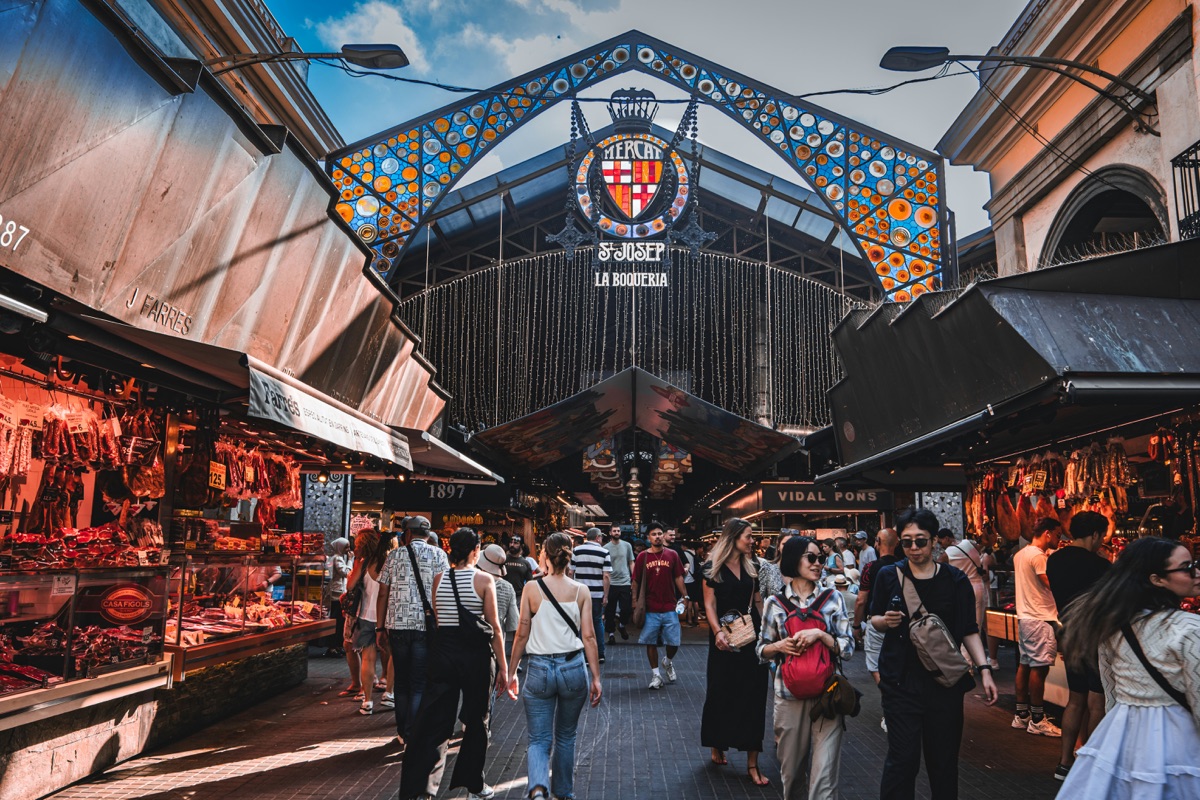
La Boquería is the poster child for tourist traps Barcelona keeps selling. A century ago it was the city’s great market. Now the first forty metres, the part everyone photographs, exist for you, the visitor, not for anyone who lives here. It’s expensive, it’s packed by 10am, and the produce up front isn’t even fresh. Those €5 fruit “juices” are watered down and sitting in the sun. The little tubs of cut mango and pineapple have been out since morning. A jamón bocadillo that costs €3.50 in a neighbourhood bar runs €8–10 at the entrance. No local does their weekly shop in that stretch.
Walk fifteen minutes in almost any direction and you’ll find a real market doing the exact same thing for half the price. That’s the whole point of this Barcelona local guide: the good version is usually just around the corner. If you want the colour and the chaos without the overpriced Barcelona markup, go where the abuelas go, earlier, cheaper, and with room to breathe. Two of the best alternatives Barcelona has are below, and both are free to wander.
What to do instead
Mercat de l'Abaceria
Gràcia · Travessera de GràciaA proper local market where people actually shop. No queue for a smoothie, no one filming you, just good produce at real prices.
Mercat de Sant Antoni
Sant Antoni · Comte d'UrgellBeautifully restored iron hall, food and a bar counter inside, plus a sprawling book and collectors’ market outside on Sundays.
2. Las Ramblas
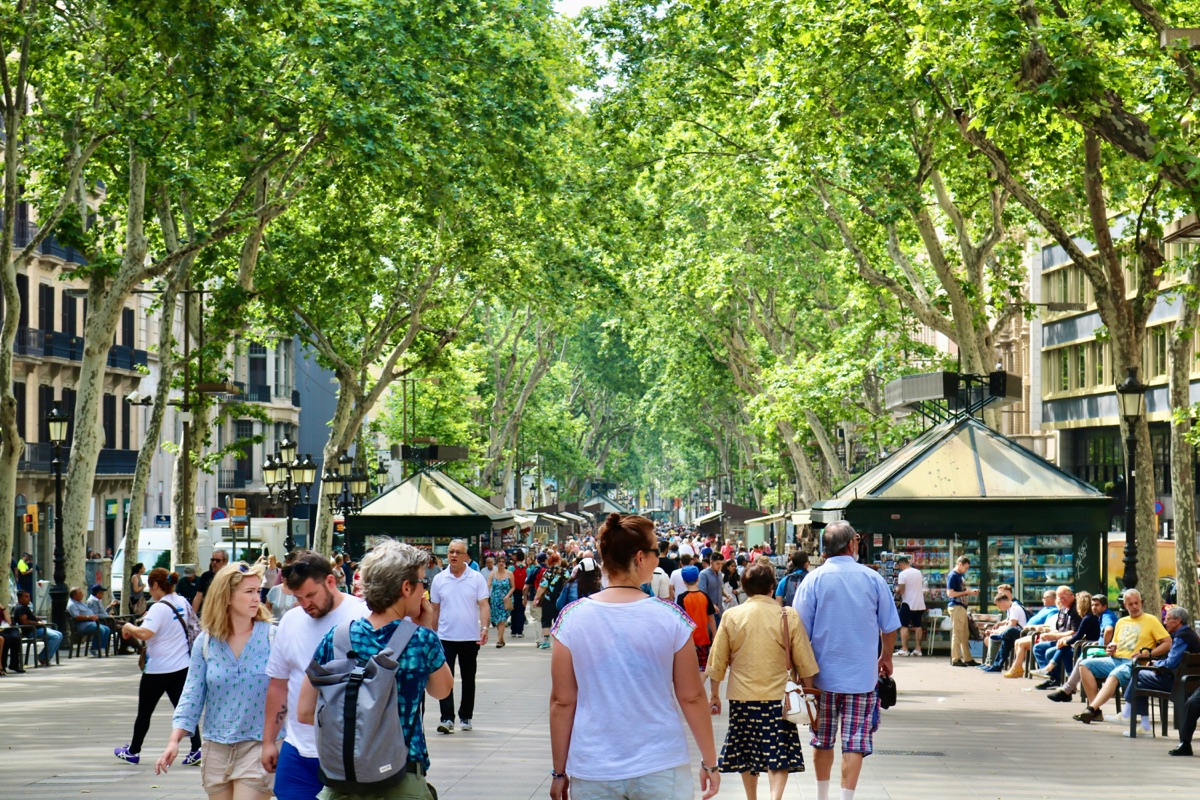
If there’s one thing that belongs at the top of any list of things to avoid in Barcelona, it’s eating on Las Ramblas. The avenue itself does nothing for you. It’s a tree-lined corridor of souvenir kiosks, tired living statues and busy pickpockets, and right now half of it is dug up for roadworks. Fine to cross once. Not worth lingering. What really costs you is the food. Every restaurant with a laminated photo menu out front is a trap: €15–20 “tourist menus” built around frozen, day-glo paella and sangria poured from a carton. You’ll pay double for a third of the quality.
Here’s the trick every Barcelona local guide comes back to, and it’s almost too simple. Turn down any perpendicular street. Two minutes off the avenue and the prices drop, the crowds thin out, and the food starts being cooked for people who live here: the Raval to the west, the Barri Gòtic to the east. Some of the best hidden gems Barcelona has are literally sixty seconds from its most overpriced corners. The rule for your first time in Barcelona: use Las Ramblas to get somewhere, never to stop.
What to do instead
One street off Las Ramblas
El Raval / Barri GòticPick any side street and keep walking. The prices drop, the crowds vanish, and the menus switch to the food people who live here actually order.
3. Casa Batlló
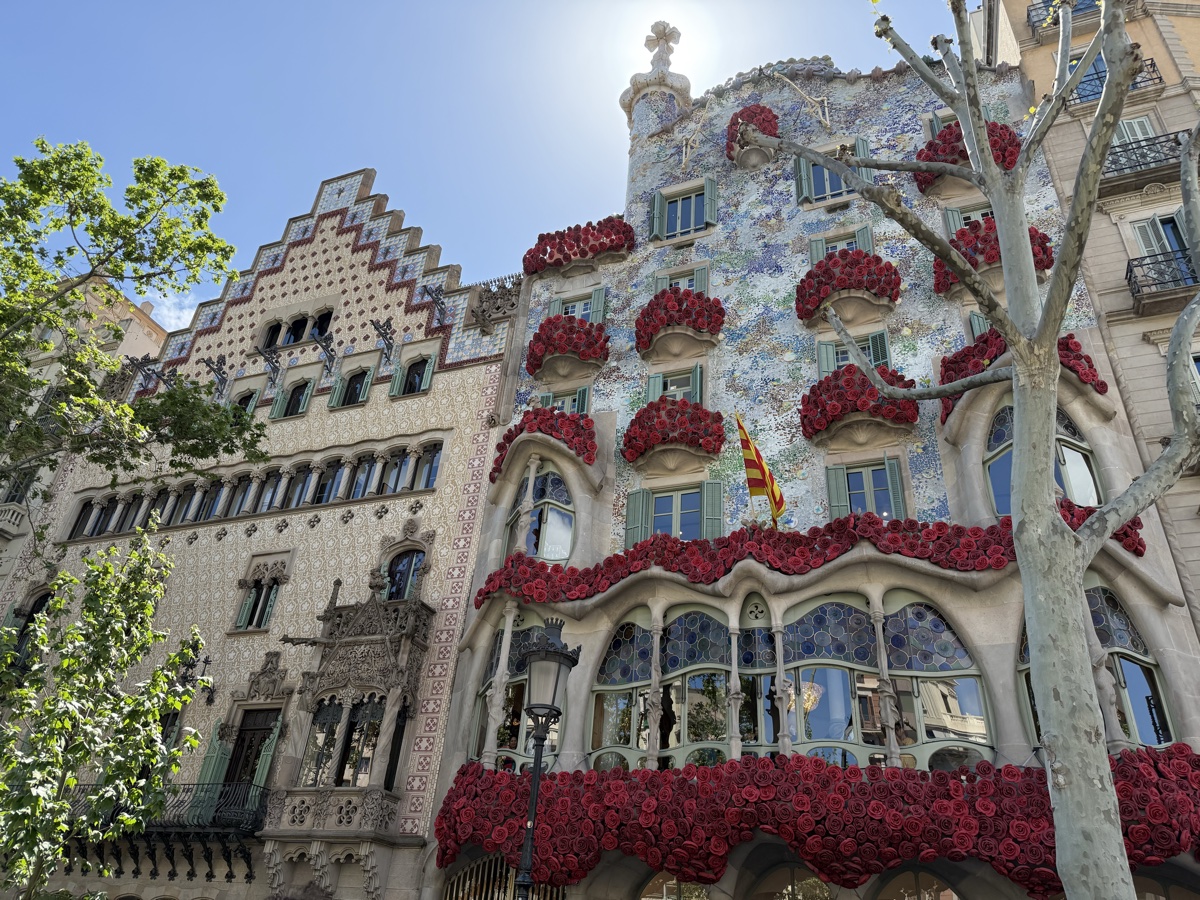
Casa Batlló is where a lot of first-time visitors blow their entire Gaudí budget, and it’s the one we’d rethink. Tickets start around €35 and climb past €45 for the “skip-the-line” options, genuinely overpriced Barcelona pricing for what you actually get. Inside it’s crowded, overheated, and you shuffle through most of it shoulder to shoulder, phone up, chasing an AR tablet instead of looking at the building. It’s beautiful from the street. Up close, it is not the best Gaudí in the city, and it’s nowhere near the best value.
If you’re visiting Barcelona for the first time and can only do one Gaudí interior beyond the Sagrada Família, don’t default to the famous house on Passeig de Gràcia, in the Eixample, just because it’s famous. Two of the best alternatives Barcelona offers are cheaper, calmer, and honestly more rewarding. One is where Gaudí’s whole career began; the other is a full masterpiece most tourists never reach. Both are below, and both cost less than a single Casa Batlló ticket. That’s a Barcelona travel tip that saves you money and a headache, and lets you look at the work instead of the back of someone’s head.
What to do instead
Casa Vicens
Gràcia · Carrer de les CarolinesGaudí’s first house, around €18. Gorgeous, calm, and cheaper, so you can actually stand still and take it in.
Palau Güell
El Raval · Carrer Nou de la RamblaAn absolute masterpiece, around €12, and almost empty. The rooftop chimneys alone are worth the ticket.
We've seen and photographed Barcelona from every angle. Our editorial, fashion-forward photoshoots are open for booking.
4. Mies van der Rohe Pavilion
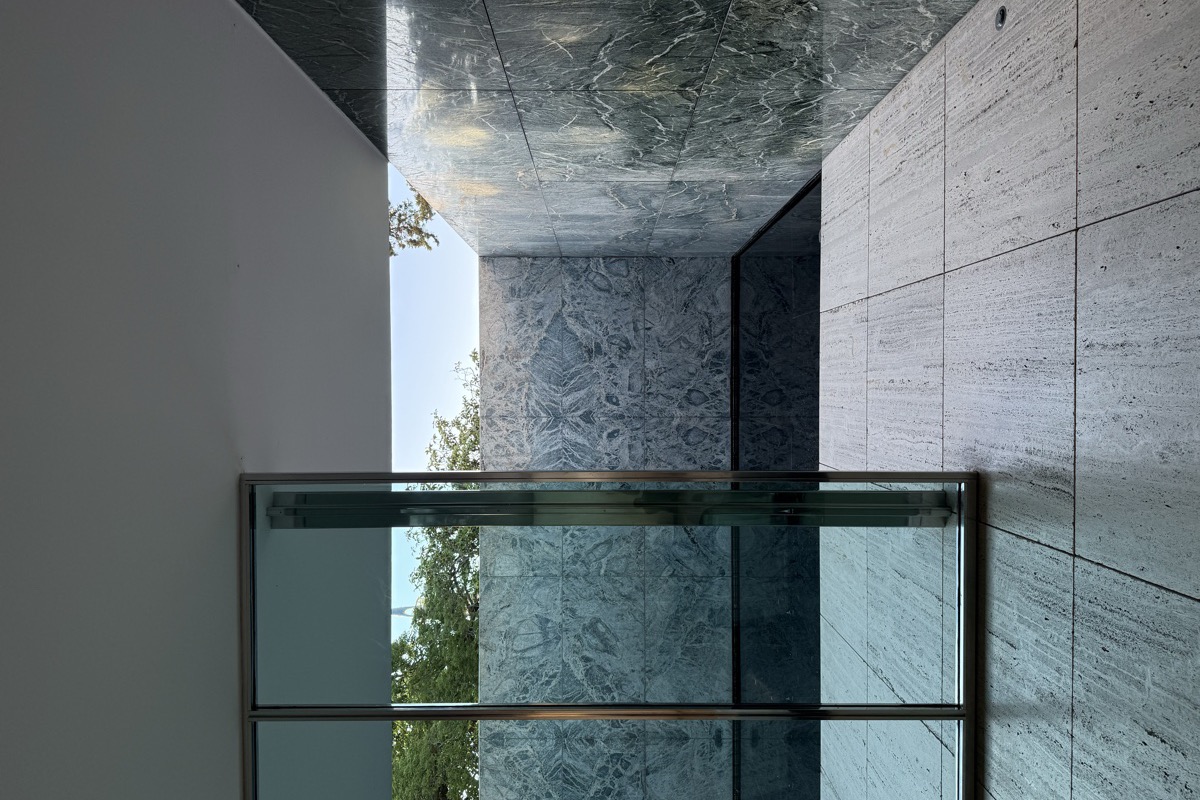
This one’s short, because the visit is short. The Barcelona Pavilion, Mies van der Rohe’s 1929 icon of modernist architecture, is a faithful rebuild of a building that originally stood for only a few months, and you’ll be through it in about three minutes. It’s small. There’s the travertine, the marble, the famous Barcelona chair, a reflecting pool, and that’s essentially it. At around €8 it isn’t the most overpriced thing on this list, but it’s the weakest on time-per-euro, and the queue-to-content ratio at midday is brutal.
If you studied architecture, you already know you’re going and you’ll love every inch of it, so skip the rest of this paragraph. For everyone else, this sits squarely in the things to avoid in Barcelona bucket, unless you’re already up on Montjuïc for something else. And you should be up on Montjuïc anyway: the hill is stacked with genuinely good, genuinely cheap things to do, from botanical gardens to the castle with its harbour views, the cable car, and one of the best museums in the city (more on that below). Put simply, if you’re doing Barcelona on a budget, your Montjuïc hours are better spent almost anywhere but inside this particular box.
5. Parc Güell
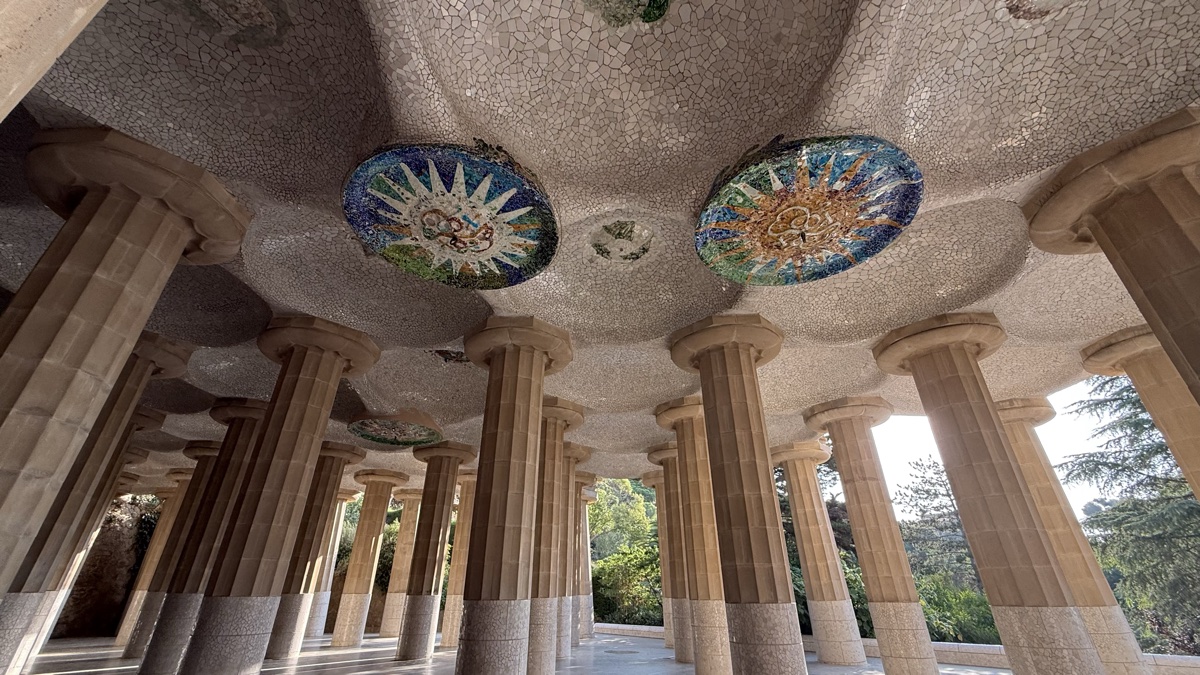
Parc Güell is the trickiest call here, because it isn’t bad, it’s just overpriced for what you actually see. The paid “Monumental Zone” runs around €18, it’s timed-entry, and in summer it’s often sold out days ahead. What you get for that is basically two things: the mosaic terrace with the serpentine bench, and the postcard view behind it. Both are lovely. Both take about twenty minutes. The rest of the ticketed area is a pleasant but fairly ordinary park you could find in any city.
Here’s the Barcelona-on-a-budget version. The huge free zone that wraps around the paid core has the same pines, the same winding terraces, the same skyline, for zero euros. Go early, wander the free paths, and skip the paywall entirely; you lose the single most photographed bench and almost nothing else. And if the view is what you’re really after, one of the best hidden gems Barcelona keeps is a ten-minute climb further up: free, wide open, and better than anything inside the gates. It’s below. Save the €18 for a long lunch somewhere the locals eat.
What to do instead
Bunkers del Carmel
El Carmel · Turó de la RoviraThe best free view in Barcelona, full stop: a 360° panorama from old civil-war bunkers. Bring something to drink and stay for sunset.
6. Picasso Museum
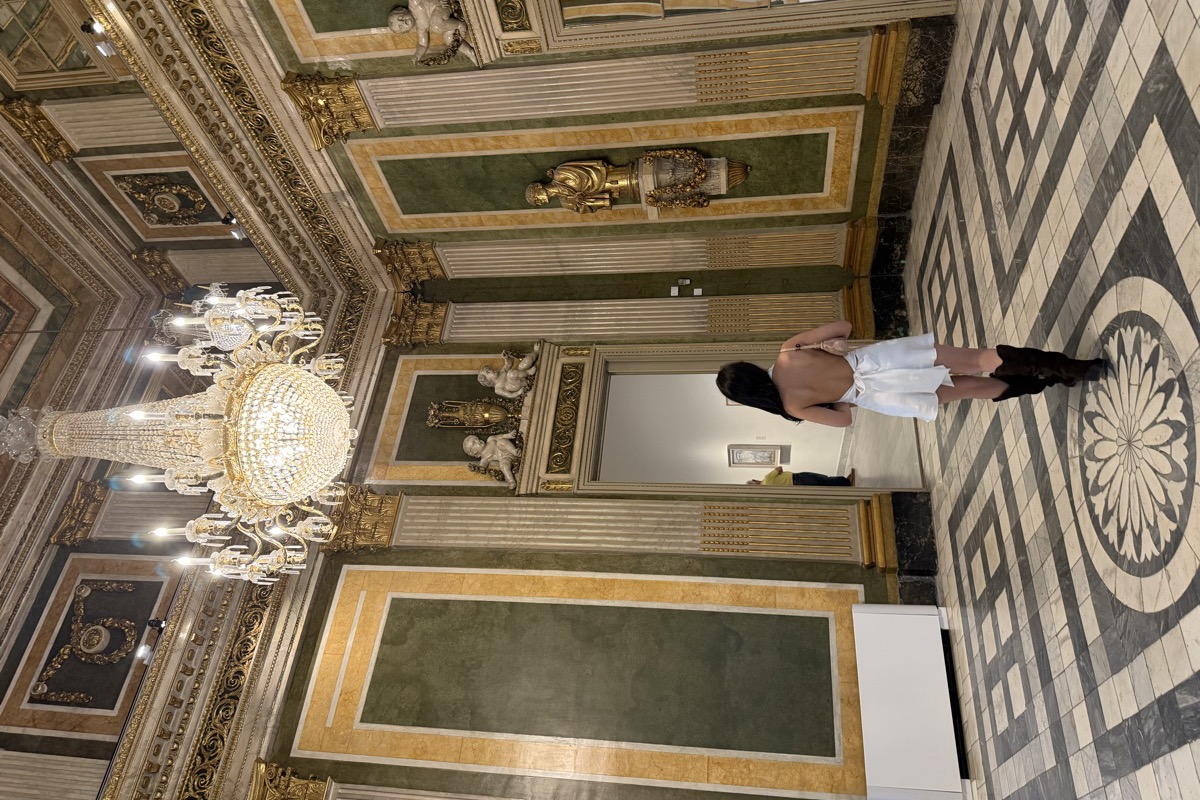
The Museu Picasso is a good museum with a misleading name. People queue and pay around €12–14 expecting the Picasso: Guernica, the great cubist canvases, the paintings from the textbooks. That is not what’s here. The collection is strongest on his early work: academic studies, the Barcelona and Blue Period years, and his “Las Meninas” series. It’s genuinely fascinating if you care about how an artist becomes an artist. It’s a letdown if you came for the greatest hits, and it’s one of the most common what-to-skip-in-Barcelona regrets we hear from visitors.
Two Barcelona travel tips if you still want to go. First, it’s free on the first Sunday of every month and on Thursday afternoons, so time it right and the overpriced-Barcelona sting disappears completely. Second, book the timed slot online so you’re not stuck in the queue winding through the Born. But if what you actually want is a great modern-art museum with world-class work and a view over the city, there’s a far better option across town on Montjuïc. It’s one of the best alternatives Barcelona has to the Picasso crowds, and, you guessed it, it’s below.
What to do instead
Fundació Joan Miró
Montjuïc · Parc de MontjuïcA far better collection in a far better building, around €14, with views over the city on the way up. Worth a whole afternoon.
The short version
Barcelona is extraordinary. Just not at these addresses. Take the money and the hours you’d have spent on these six overpriced stops and put them into the neighbourhoods, the food locals actually eat, and the hidden gems Barcelona keeps for people who look past the coach itinerary. Skip the tourist traps, and the city quietly opens up. That’s exactly what we do on our walks, and exactly what we shoot on our photoshoots.
Skip the traps. See the real Barcelona with us. Our neighbourhood walks take you where locals actually go, and our photoshoots capture the version of Barcelona that's actually worth remembering.